People
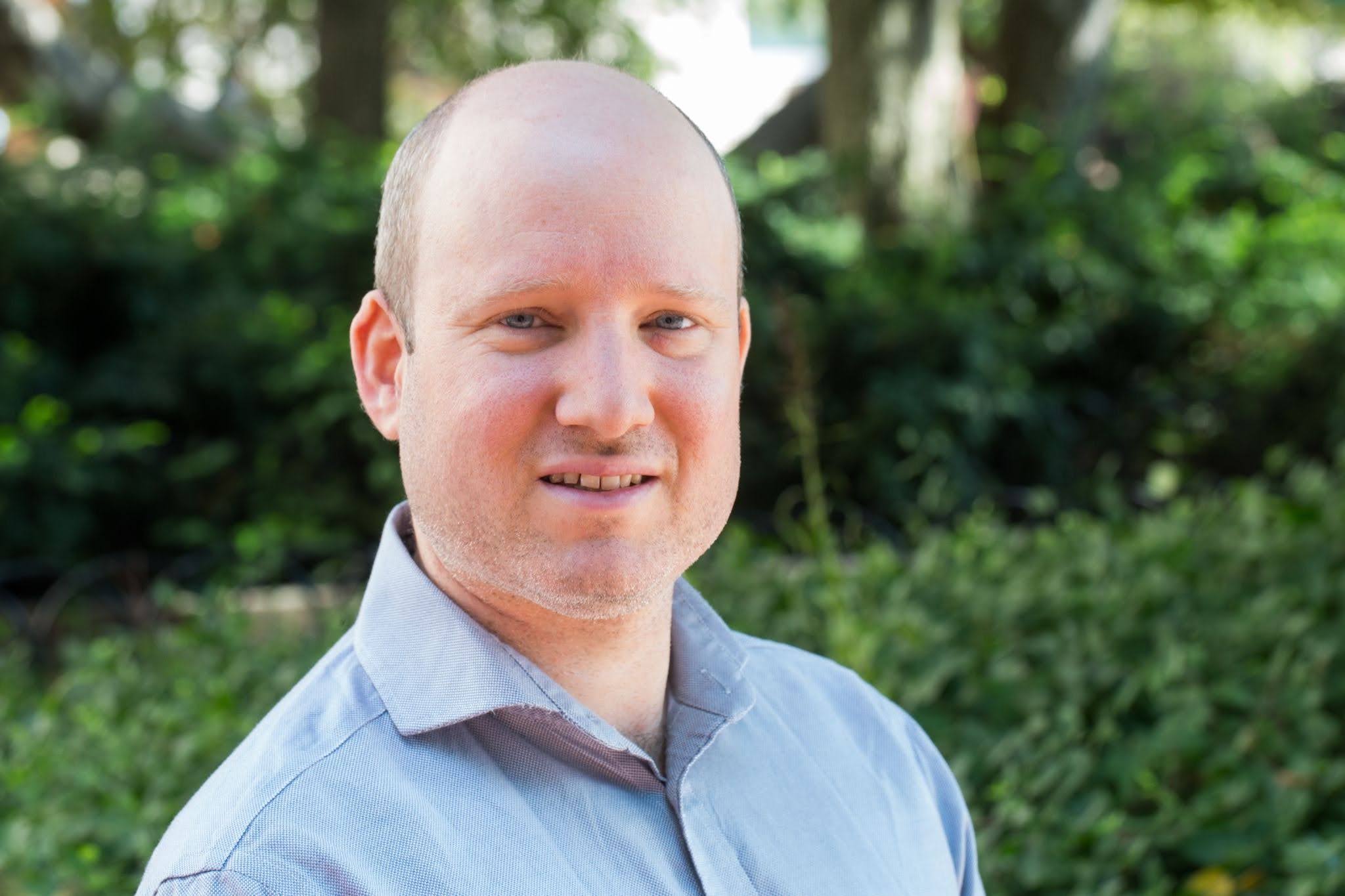
Ivan Corwin
Ivan Corwin is a professor of mathematics and statistics at Columbia University. He is known for his work on solvability of the Kardar-Parisi-Zhang equation (with Quastel and Sasamoto), development of Macdonald processes (with Barraquand and Borodin), theory of Gibbsian line ensembles in conjunction with the Yang-Baxter equation (with Aggarwal and Borodin) and development of extreme diffusion theory (with Barraquand and E. Corwin).
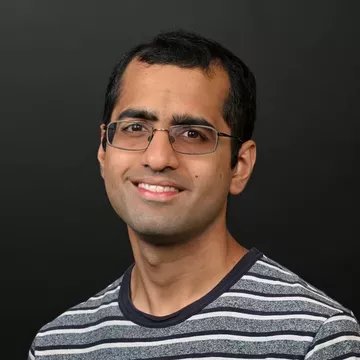
Amol Aggarwal
Amol Aggarwal is a professor of mathematics at Stanford University. His work unifies algebraic and analytic methods to prove universality at the interface of probability theory and mathematical physics. He has contributed to the study of random surfaces by proving universality results in random tilings and characterization results for their interface fluctuations; interacting particle systems, by providing a framework using the Yang-Baxter equation to prove Kardar-Parisi-Zhang scaling limits (with Borodin and I. Corwin); and many-body integrable dynamics, by developing a framework to analyze large-scale phenomena for the Toda lattice.
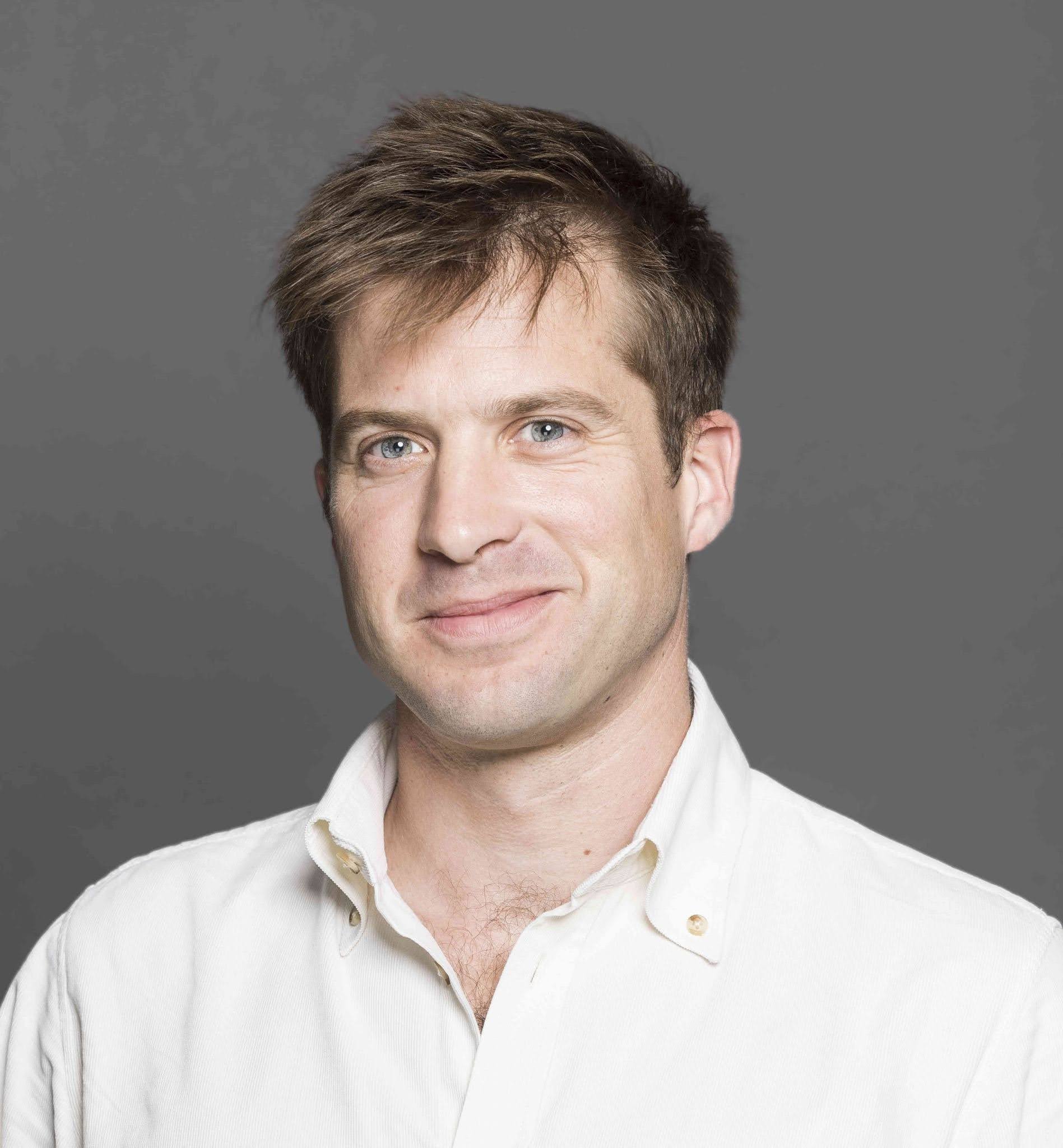
Guillaume Barraquand
Guillaume Barraquand is a CNRS researcher in the Physics department (LPENS) of Ecole normale supérieure in Paris. With Ivan Corwin, he introduced an integrable model of random walk in random environment (Beta RWRE). He is also a specialist of the exact solvability of Kardar-Parisi-Zhang class models on bounded domains.
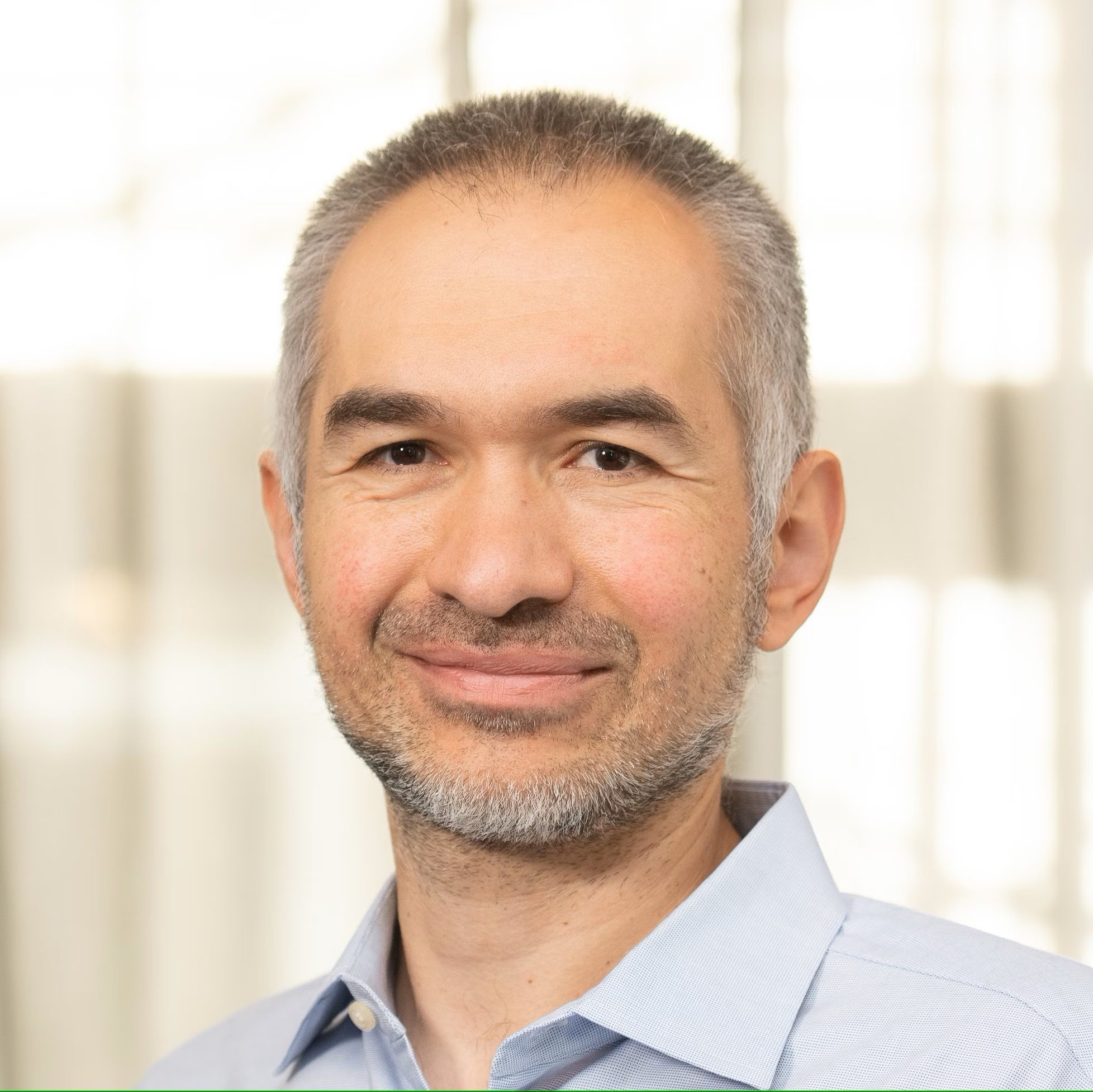
Alexei Borodin
Alexei Borodin is a professor of mathematics at MIT. He worked on various methods of Integrable Probability, often of representation theoretic origin, including: solution of TASEP with general initial data (with Sasamoto); solvable (2+1)-dimensional anisotropic KPZ dynamics; Macdonald processes (with Corwin and Barraquand); Markov duality approach (with Corwin and Sasamoto); stochastic vertex models (with Corwin) and their higher rank versions leading to colored Gibbsian line ensembles (with Aggarwal); and periodic weight dimer models with their tropical limits.
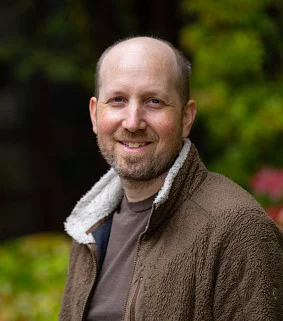
Eric Corwin
Eric Corwin is a professor of soft matter physics at the University of Oregon. His research focuses on out of equilibrium systems with a particular focus on the extreme statistics of diffusion, and frustrated systems as glasses and jammed solids.
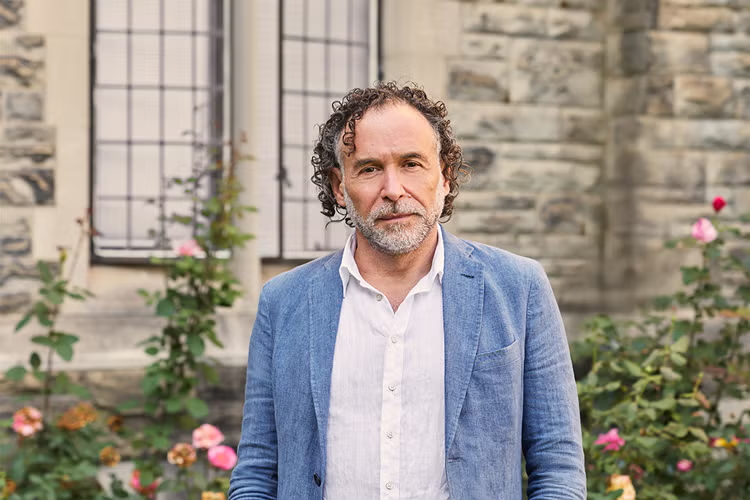
Jeremy Quastel
Jeremy Quastel is a professor of mathematics at the University of Toronto working at the interface of probability and analysis. He developed the theory of hydrodynamic limits, showing that stochastic lattice gases converge to Leray solutions of the incompressible Navier–Stokes equations. His work includes the Brunet–Derrida correction for stochastic KPP fronts and the introduction of white‑noise invariant measures for Hamiltonian PDEs. In the KPZ universality class, he co‑discovered the first exact solutions, introduced weak universality, and—through the general solutions of TASEP and PNG—constructed the KPZ fixed point and revealed its links to integrable nonlinear PDEs.
Tomohiro Sasamoto
Tomohiro Sasamoto is a professor of physics at Institute of Science Tokyo (formerly Tokyo Institute of Technology). He is known for his works on exact solutions of the Kardar-Parisi-Zhang equation and its discrete analogues (with A. Borodin, I. Corwin, Quastel), the development of large deviation theory for non-equilibrium stochastic processes, and the analysis of integrable quantum many-body systems. His research primarily focuses on uncovering universal fluctuation and transport properties in non-equilibrium statistical mechanics.